
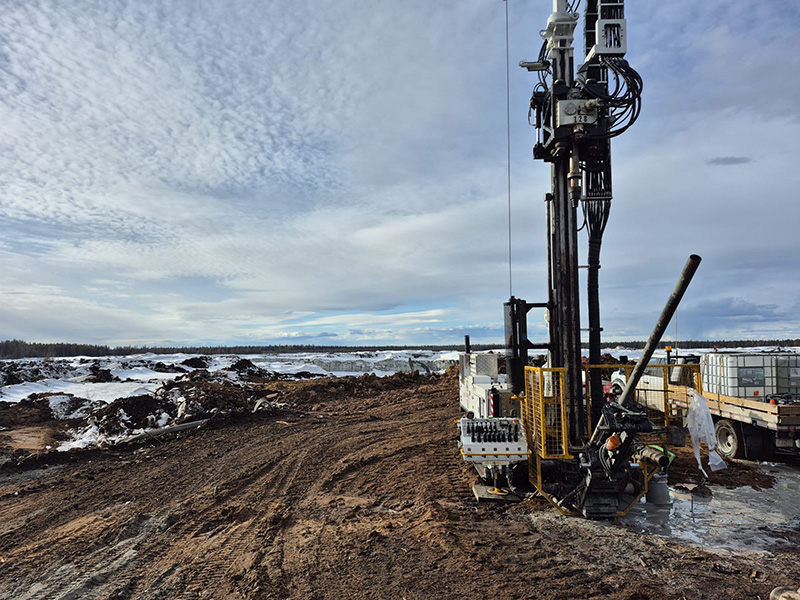
Geotechnical core drilling is a foundational service in construction, engineering, and environmental planning, and Sonic Edge specializes in it across Canada. With advanced drill rigs and deep regional expertise, Sonic Edge supports safe, efficient, and precise subsurface investigations for infrastructure, mining, and environmental projects. Whether it’s through sonic drilling, rotary methods, or specialized core recovery systems, our team delivers reliable geotechnical data that helps engineers, developers, and environmental consultants make confident decisions. In this blog, we explore the geotechnical core drilling process, including why it’s important, how it works, the tools used, and how the results support foundation engineering, ground stability assessments, and environmental evaluations.
What Is Geotechnical Core Drilling?
Geotechnical core drilling is the process of using specialized drill rigs and tools to extract cylindrical samples (cores) of soil and rock from below the ground surface. These core samples are used to conduct geotechnical assessments, environmental investigations, and foundation engineering studies.
A geotechnical drilling company may be hired for:
- Environmental and geotechnical drilling programs
- Soil and rock testing for infrastructure or mining
- Core sample extraction for analysis
- Ground stability assessment and subsurface soil analysis
- Drilling for geotechnical site investigation and environmental assessment
Geotech drills are essential tools in site investigation, allowing engineers to collect clean, intact samples that provide insights into soil structure, moisture content, strength, and more.
Why Is Geotechnical Core Drilling Important?
Whether for a new building, a bridge, or a mine site, understanding what lies beneath the surface is essential.
Geotechnical core drilling provides:
- Data for geotechnical reports that support safe and stable design
- Information on soil bearing capacity and rock formations
- Core recovery rates to determine sample quality
- Accurate borehole logging for stratigraphy and soil behaviour
- Insight into potential environmental contamination
Subsurface analysis helps engineers mitigate risk by evaluating load-bearing capacity, identifying weak soil layers, and locating groundwater zones. This is especially important in complex projects involving deep foundations, high-load infrastructure, or environmentally sensitive zones. Without reliable geotechnical data, costly structural failures, delays, or environmental violations could occur.
Geotechnical assessments also play a crucial role in environmental drilling methods. When contamination is suspected, core drilling supports environmental assessment by identifying pollutant levels and providing insight into the soil matrix and underground fluid movement.
How Does the Geotech Drilling Process Work?
Step 1: Planning and Site Selection Drilling contractors conduct preliminary research and choose drilling locations based on project needs, access, and safety.
Step 2: Mobilization and Setup Drill rigs, equipment, and safety barriers are brought to the site. Depending on the job, rigs may be mounted on tracks, trucks, or skid platforms.
Step 3: Drilling and Core Recovery Specialized drill bits are used to cut through soil and rock. As drilling progresses, the drill string extracts a cylindrical core that is stored in core boxes for analysis.
The most common core diameters range from 2 to 6 inches, depending on the ground type and required analysis. Larger cores may be needed for comprehensive soil and rock testing, including subsurface soil analysis and rock core analysis.
Step 4: Logging and Soil Sampling Each core is visually logged to record:
- Soil colour, texture, and composition
- Fractures, bedding, or stratigraphy changes
- Rock quality designation (RQD)
- Signs of contamination or groundwater presence
Additional soil sampling may be performed through Shelby tubes or split-spoon sampling for soft soils.
Step 5: Subsurface Analysis Laboratories conduct tests on the core samples, including:
- Strength tests (unconfined compressive strength, triaxial tests)
- Permeability and porosity
- Grain size distribution and Atterberg limits
- Rock core analysis and chemical composition
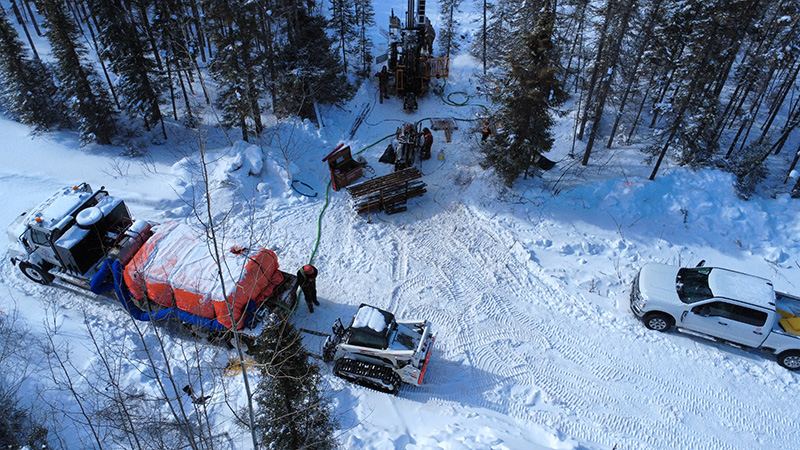
Equipment and Methods Used
Different drilling methods are used depending on the site and objectives:
- Sonic Drilling – Uses high-frequency vibrations to create a clean, continuous core. Ideal for environmental and geotechnical drilling projects involving mixed or saturated soils.
- Auger Drilling – Used for shallow geotechnical site investigations and foundation engineering studies. Hollow stem augers are common for environmental sampling.
- Mud Rotary or Air Rotary Drilling – Often used for deep boreholes or water-bearing formations. Drilling fluids support borehole stability and aid in cuttings removal.
- Diamond Core Drilling – The gold standard for rock coring. High-quality core recovery enables precise analysis of rock formation properties, fractures, and structural integrity.
Drilling equipment types vary depending on access requirements, depth goals, and subsurface conditions. Choosing the right drill rig and coring tools is key to improving core recovery efficiency and ensuring accurate geotechnical data collection.
Challenges in Deep Geotechnical Drilling Operations
Deeper drilling poses several challenges:
- Core recovery efficiency may drop in loose or fractured soils
- Water inflow can destabilize the borehole and compromise sample quality
- Borehole deviation can lead to inaccurate data if not corrected
To overcome these challenges, drilling contractors use techniques such as dual-rotary systems, casing advancement, and drilling fluids to support borehole stability and improve sample integrity. Borehole logging tools may also be deployed to track alignment, changes in formation, and groundwater inflow.
Environmental Considerations
Environmental and geotechnical drilling often overlap in contaminated or sensitive sites.
Soil and groundwater samples are collected to:
- Detect subsurface contamination
- Evaluate site suitability for development or remediation
- Meet local environmental regulations
Environmental drilling methods must comply with strict provincial and federal guidelines. Specialized equipment may be used to prevent cross-contamination, and instrumentation such as vibrating wire piezometers or slope inclinometers may be installed to monitor conditions over time. 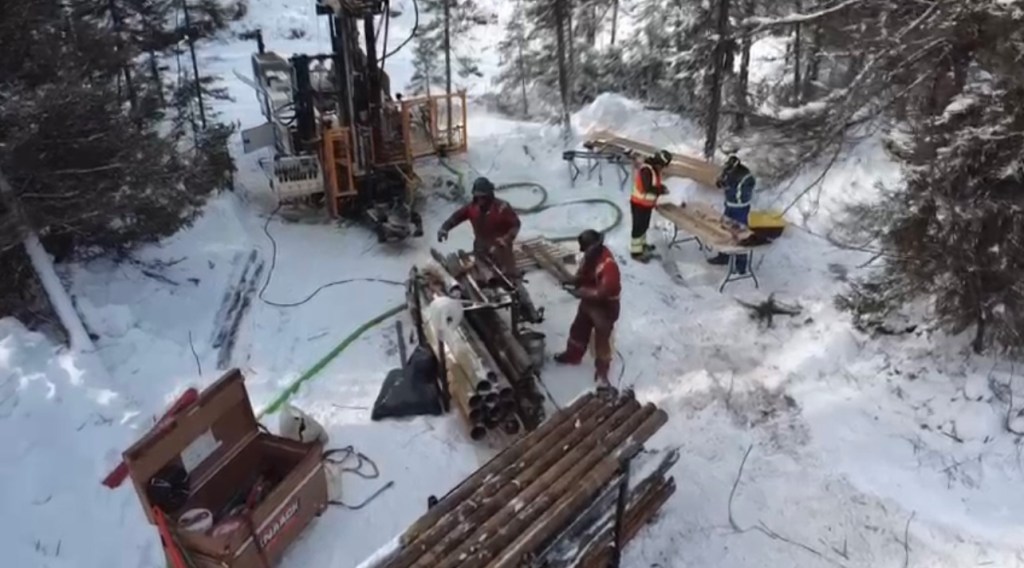
Interpreting Results: From Core to Construction
Once all testing is complete, results are synthesized into a comprehensive geotechnical report. This document is essential for engineers, architects, and construction managers and serves as the foundation for critical decisions around design and implementation.
Typical elements of a geotechnical report include:
- Site geology and stratigraphy
- Core recovery and soil classification
- Groundwater and pore pressure data
- Foundation recommendations and ground stability assessment
This report feeds directly into construction design, informing excavation strategies, material selection, slope reinforcement, and long-term risk management. In mining, it guides pit design and tailings pond development. In urban construction, it shapes zoning permits and supports due diligence for environmental compliance.
FAQ: Geotechnical Drilling Insights
How is geotechnical drilling data interpreted for engineering projects?
Data is analyzed by geotechnical engineers to understand site-specific soil behaviour and recommend safe design parameters for construction or mining.
What factors influence core recovery efficiency in different soils?
Soil type, moisture content, drilling method, and equipment used all impact how well core samples can be retrieved.
How do environmental regulations impact drilling site selection?
Sites may be restricted due to contamination, wildlife, or proximity to water. Environmental assessments must guide where and how drilling can proceed.
What are common challenges in deep geotechnical drilling operations?
Collapse-prone soils, water ingress, and misaligned boreholes can all affect drilling success and sample quality.
How is subsurface contamination detected during environmental drilling?
Cores are tested for chemical, hydrocarbon, and metal contaminants. Groundwater samples may be extracted and analyzed for pollutants.
Partner with Sonic Edge for Reliable Subsurface Data

Geotechnical core drilling is a foundational tool for safe, informed construction and environmental decision-making. At Sonic Edge, we combine advanced drilling equipment, trained operators, and a deep understanding of Canada’s geology to deliver accurate, dependable subsurface data across civil, mining, and environmental projects.
Ready to start your next geotechnical or environmental program? Let’s talk.