
In-Situ Testing for Resource Characterization
What is In-Situ Testing for Resource Characterization?
In-situ testing for resource characterization refers to a set of on-site field tests used to evaluate the physical, mechanical, and hydraulic properties of soil, rock, or groundwater in their natural state, without removing samples to a lab. These tests are vital in mining, geotechnical engineering, hydrogeology, and environmental studies to characterize the quantity, quality, and geomechanical behavior of natural resources like minerals, oil sands, groundwater, or construction materials.
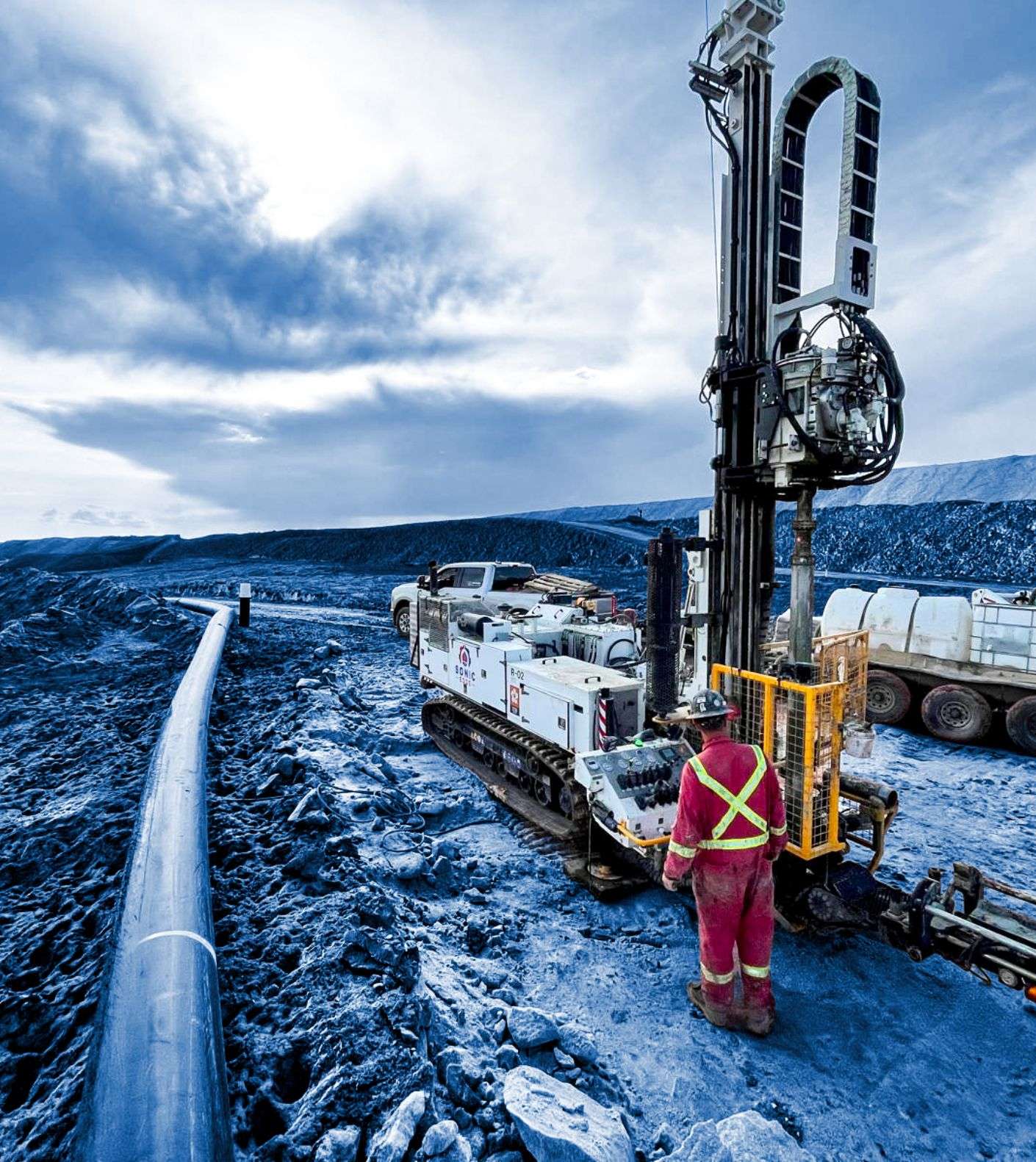
Common In-Situ Testing Methods
1. Standard Penetration Test (SPT)
- Hammer-driven split spoon sampler
- Provides N-value indicating soil resistance
- Useful in soils and weak rock
- Outputs: Soil density, consistency, classification
2. Cone Penetration Test (CPT / CPTu)
- Pushes a sensor-equipped cone into the ground
- Measures tip resistance (qc), sleeve friction (fs), and pore pressure (u2)
- Ideal for soft to medium soils
- Outputs: Soil behavior type, stratigraphy, undrained shear strength
3. Vane Shear Test (VST)
- Blade inserted and rotated to shear soil in place
- Measures undrained shear strength of soft clays
4. Pressuremeter Test (PMT)
- Expands a probe in a borehole to measure stress-strain response
- Provides deformation modulus (E) and limit pressure
- Suitable for both soils and weak rock
5. Dilatometers (DMT)
- Flat blade inserted into soil; membrane inflates laterally
- Measures deformation modulus, strength, stress history
6. Slug and Pumping Tests
- Conducted in monitoring wells
- Determine hydraulic conductivity and aquifer response
- Key for groundwater resource characterization
7. In-Situ Permeability Tests (Lugeon / Packer Tests)
- Water injected into isolated borehole intervals
- Measures rock mass permeability—common in hard rock mining or tunneling
8. Seismic Crosshole / Downhole Testing
- Use of geophones and seismic sources to assess shear and compression wave velocities
- Derives dynamic soil and rock moduli, useful in earthquake or blast analysis
Purpose of In-Situ Testing in Resource Characterization
| Objective | Description |
| Determine strength and stiffness | For foundation design, slope stability, mine pit safety |
| Assess permeability and hydraulic conductivity | For water flow and containment assessments |
| Characterize stratigraphy and heterogeneity | Identify layering, fractures, and formation boundaries |
| Guide sampling and drilling programs | Optimize locations and depths for coring or extraction |
| Estimate resource recoverability | For oil sands, minerals, or water-bearing formations |
Applications by Sector
| Sector | In-Situ Testing Role |
| Mining | Characterize pit wall stability, ore zone strength, tailings foundations |
| Oil Sands | Estimate shear strength, bitumen zone behavior, overburden consolidation |
| Infrastructure | Determine bearing capacity, settlement potential, liquefaction risk |
| Hydrogeology | Estimate aquifer yield, contaminant transport, seepage zones |
| Environmental | Assess permeability of liners, caps, or remediation zones |
Advantages of In-Situ Testing
| Advantage | Explanation |
| Represents in-place behavior | Avoids disturbance from sampling |
| Continuous or high-resolution data | Especially with CPT or DMT |
| Faster and cost-effective | Compared to extensive lab testing |
| Supports real-time decisions | Adjust exploration or design on-site |
| Integrates with modeling | Provides input for numerical and analytical models (e.g., FEM, groundwater flow models) |
Limitations and Considerations
Limitation | Notes |
Access limitations | Some methods require boreholes or large equipment |
Data interpretation | Requires experienced engineers and good site knowledge |
Not suitable for all formations | Bouldery or highly fractured zones can be problematic |
Environmental sensitivity | Vibration and water use may require mitigation measures in protected areas |
Summary
| Attribute | Details |
| Definition | On-site field testing to assess soil, rock, or groundwater conditions in place |
| Methods Include | SPT, CPT, Vane Shear, PMT, Slug Tests, DMT, Lugeon Tests, Seismic Tests |
| Used In | Mining, oil sands, hydrogeology, construction, environmental remediation |
| Main Benefits | High accuracy, real-world behavior, support for safe and economic design decisions |