
Minesite Geotech Programs, Tailings Pond Investigations
What are Minesite Geotech Programs, Tailings Pond Investigations?
Mine site geotechnical programs and tailings pond investigations are critical elements of modern mining operations, aimed at ensuring the safety, stability, and environmental compliance of mine infrastructure—particularly pits, waste dumps, and tailings storage facilities (TSFs). These programs involve subsurface investigation, instrumentation, and ongoing monitoring to reduce geotechnical risks such as slope failure, seepage, or dam breaches.
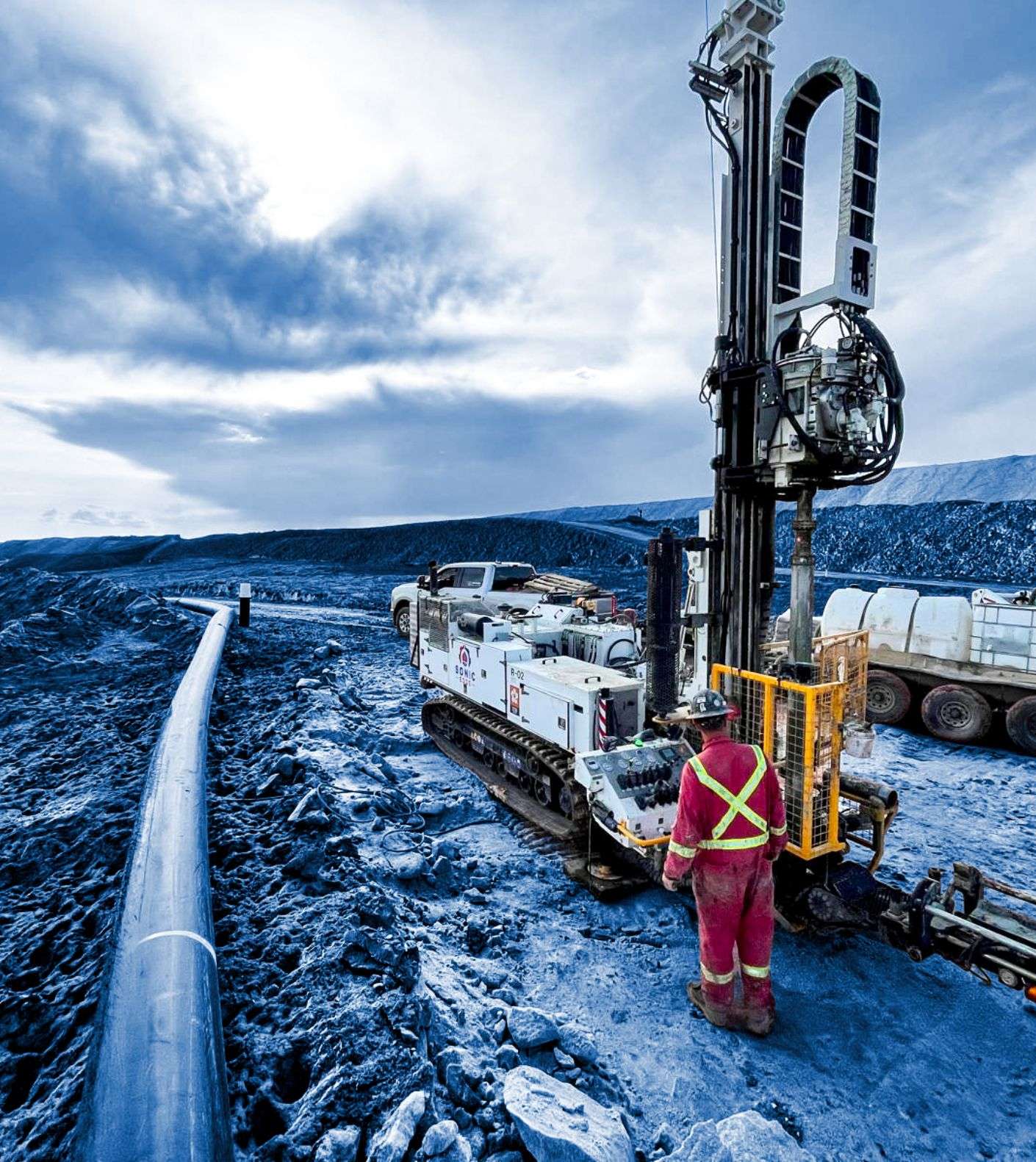
Mine Site Geotechnical Programs
Purpose:
Geotechnical programs at mine sites are designed to:
- Characterize ground conditions
- Assess slope stability for open pits and waste dumps
- Support foundation design for haul roads, crushers, and infrastructure
- Monitor deformation, pore pressures, and seismic response
- Guide mine planning and expansion
Key Components:
a. Field Investigations
- Drilling & Sampling: Core drilling (HQ/NQ/PQ), SPT, Shelby tubes, CPT
- Logging: Soil and rock characterization (lithology, RQD, UCS, etc.)
- Test Pits & Trenches: For near-surface conditions and site access
b. Instrumentation
- Inclinometers: Detect slope movements in pit walls or dumps
- Piezometers (VW or standpipe): Monitor pore water pressures in slopes and foundations
- Extensometers: Track deformation or tension cracks
- Seismic or blast monitoring sensors
c. Laboratory Testing
- Strength and deformation: Triaxial, direct shear, unconfined compression
- Permeability, consolidation, grain size, Atterberg limits
- Rock mechanics: UCS, Brazilian tensile strength, point load index
d. Geotechnical Modeling and Analysis
- 2D/3D slope stability modeling
- Finite element modeling (FEM)
- Ground response under static and dynamic (seismic or blasting) conditions
Applications:
- Open pit design and optimization
- Waste dump stability
- Infrastructure foundations
- Support for life-of-mine planning
- Tailings Pond Investigations
Tailings Pond Investigations
Purpose:
Tailings ponds or tailings storage facilities (TSFs) store fine-grained waste from mineral processing. These embankments are often constructed from mine waste and are susceptible to seepage, liquefaction, and structural failure.
Tailings pond investigations focus on:
- Assessing dam stability
- Pore pressure and seepage control
- Evaluating tailings consolidation and strength
- Compliance with regulatory frameworks (e.g., CDA, GISTM, ICMM)
Key Components:
a. Drilling and Sampling
- CPT and SPT: For profiling loose tailings and foundation soils
- Vane shear: In very soft, fine-grained tailings
- Shelby tube or piston sampling: For undisturbed samples in soft materials
b. Instrumentation
- Vibrating Wire Piezometers (VWPs): Track pore water pressure changes and seepage potential
- Inclinometers: Detect horizontal movement within embankments
- Settlement plates: Monitor tailings consolidation over time
- Pore pressure transducers and thermistors
c. Laboratory Testing
- Critical state behavior of tailings (liquefaction potential)
- Shear strength (CU, CD triaxial)
- Consolidation behavior and creep
- Hydraulic conductivity
d. Geotechnical Analyses
- Slope stability modeling (limit equilibrium and FEM)
- Seepage modeling (SEEP/W, MODFLOW)
- Earthquake-induced liquefaction analysis
- Construction sequencing and raise design
Regulatory and Safety Context
Both mine geotechnical and tailings programs are increasingly regulated and aligned with best practice frameworks such as:
- Global Industry Standard on Tailings Management (GISTM)
- Canadian Dam Association (CDA) Dam Safety Guidelines
- NI 43-101 reporting standards
- Mine Health and Safety Acts
Summary Comparison
Program | Focus | Techniques | Purpose |
Mine Site Geotechnical | Pit slopes, waste dumps, infrastructure | Drilling, instrumentation, lab testing, FEM modeling | Ensure safe slope angles, reduce failure risk |
Tailings Pond Investigations | TSF stability, pore pressure, seepage | Cone tests, piezometers, lab testing, seepage and liquefaction analysis | Prevent dam breaches, monitor consolidation and seepage |
Both programs are multi-disciplinary, requiring coordination among geotechnical engineers, geologists, hydrogeologists, and environmental specialists. Their outputs directly impact:
- Mine design
- Operational safety
- Regulatory compliance
- Environmental risk mitigation