
Overburden Drilling
What is Overburden Drilling?
Overburden drilling refers to the process of drilling through the overburden—the loose, unconsolidated material that lies above bedrock or a target geological formation. This material can include topsoil, sand, gravel, glacial tills, clay, silt, and boulders, and is often unstable and prone to collapse during drilling. Overburden drilling is a crucial first step in mining, geotechnical, environmental, and oil sands operations.
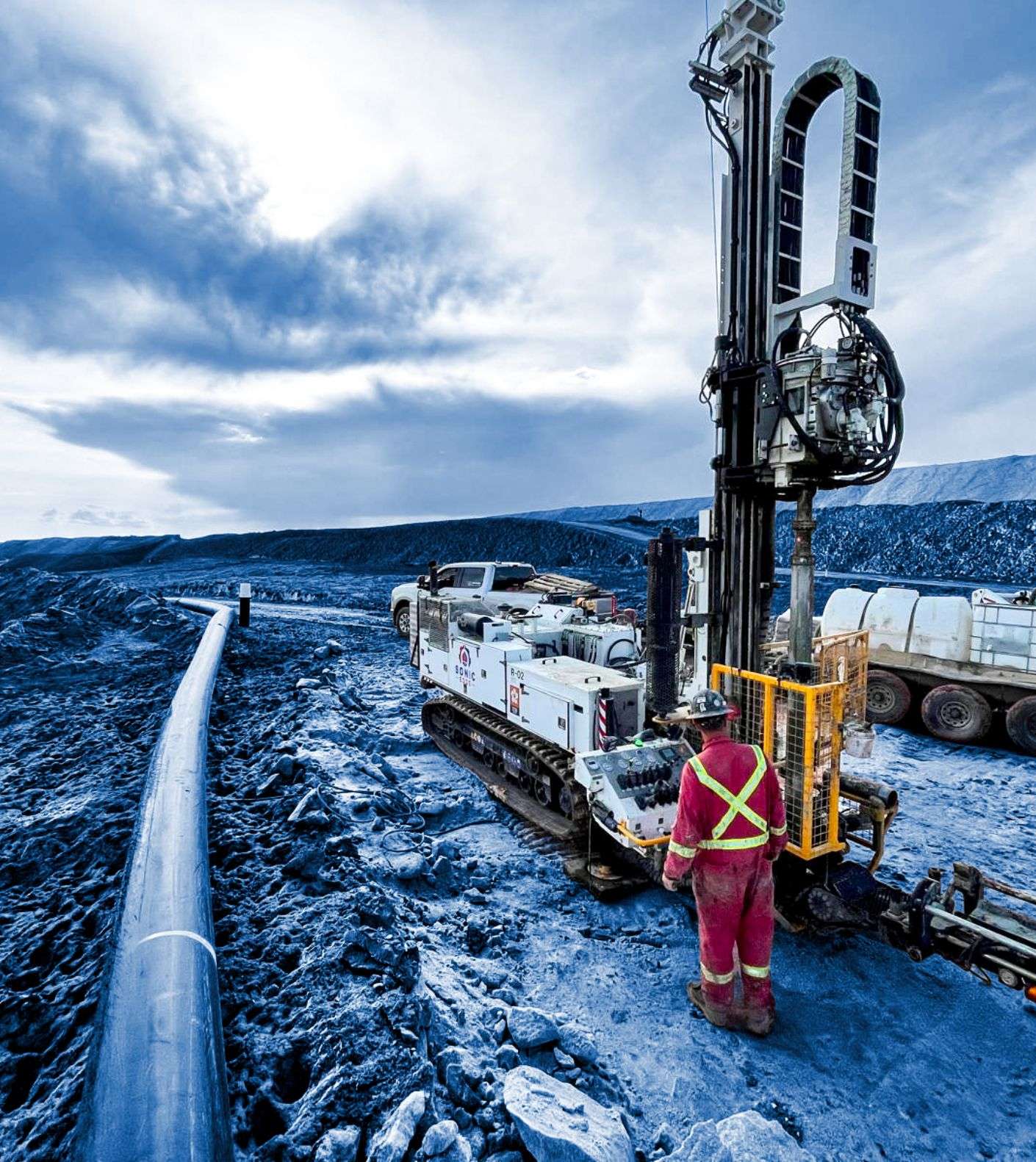
What Is “Overburden”?
In geotechnical and geological terms, overburden is the non-bedrock layer covering solid rock or resource zones such as:
- Oil sands
- Mineral ore bodies
- Aquifers
- Foundation strata
Drilling through this material poses challenges because it is typically unconsolidated, variable, and water-bearing.
Common Methods of Overburden Drilling
1. ODEX (Overburden Drilling with Eccentric Bit)
- A down-the-hole hammer with an eccentric reamer cuts a hole larger than the casing.
- The casing is advanced simultaneously to support the borehole.
- Common in oil sands, water well, and foundation work.
2. Dual Rotary Drilling
- Both the drill bit and casing rotate simultaneously.
- The bit drills ahead; the casing follows closely, preventing collapse.
- Effective in glacial tills, boulders, and deep overburden.
3. Auger Drilling
- Hollow stem or solid stem augers screw through soft overburden.
- Suitable for shallow or soft formations.
- Limited in bouldery or water-saturated soils.
4. Sonic Drilling
- Uses high-frequency vibration to fluidize and penetrate overburden.
- Excellent core recovery and speed.
- Ideal for environmental and geotechnical
5. Mud Rotary Drilling
- Uses drilling fluid (mud) to lift cuttings and support borehole walls.
- Not suitable in highly permeable overburden unless managed carefully.
Casing in Overburden Drilling
- Casing is often installed as the drill advances to prevent cave-ins and isolate water zones.
- Casing is usually removed (temporary) or left in place (permanent) depending on the final use.
Purpose of Overburden Drilling
| Use Case | Goal |
| Exploration drilling | Access the target zone (e.g., oil sands or ore) beneath loose material |
| Well construction | Install casing or instrumentation through loose upper layers |
| Environmental sampling | Reach groundwater zones or contaminant plumes beneath soils |
| Geotechnical profiling | Characterize soil behavior and strength for construction design |
Challenges of Drilling in Overburden
| Issue | Description |
| Caving/collapse | Borehole walls may collapse without support |
| Water inflow | Saturated soils can flood the borehole or erode materials |
| Mixed materials | Varying layers of sand, silt, gravel, clay, and boulders |
| Difficult casing | Hard to advance casing without specialized tools in loose layers |
Applications by Industry
| Sector | Application |
| Oil Sands | Drill through overburden to reach McMurray Formation |
| Mining | Penetrate glacial till or regolith to reach ore bodies |
| Geotechnical | Access competent layers for foundations or slope studies |
| Environmental | Install monitoring wells below contaminated overburden |
Summary
| Attribute | Details |
| Definition | Drilling through unconsolidated material above bedrock or target zone |
| Challenges | Collapsible soils, mixed layers, water inflow |
| Methods | ODEX, dual rotary, auger, sonic, mud rotary |
| Purpose | Access, sample, or install through unstable surface layers |
| Best Practice | Advance casing during drilling to stabilize borehole |
Overburden drilling is an essential component of subsurface investigations and resource extraction, and it requires choosing the right drilling system based on ground conditions, depth, and project objectives.