
Water Well and Dewatering System Installation
What is Water Well and Dewatering System Installation?
Water well and dewatering system installation are critical processes in construction, mining, and environmental engineering to manage groundwater. They serve two different but often complementary purposes:
- Water well installation is designed to extract groundwater for use (e.g., drinking water, industrial process water, dust suppression).
Dewatering system installation is designed to remove or lower groundwater levels to dry out excavations, tunnels, or mining areas, enabling safe and stable work conditions.
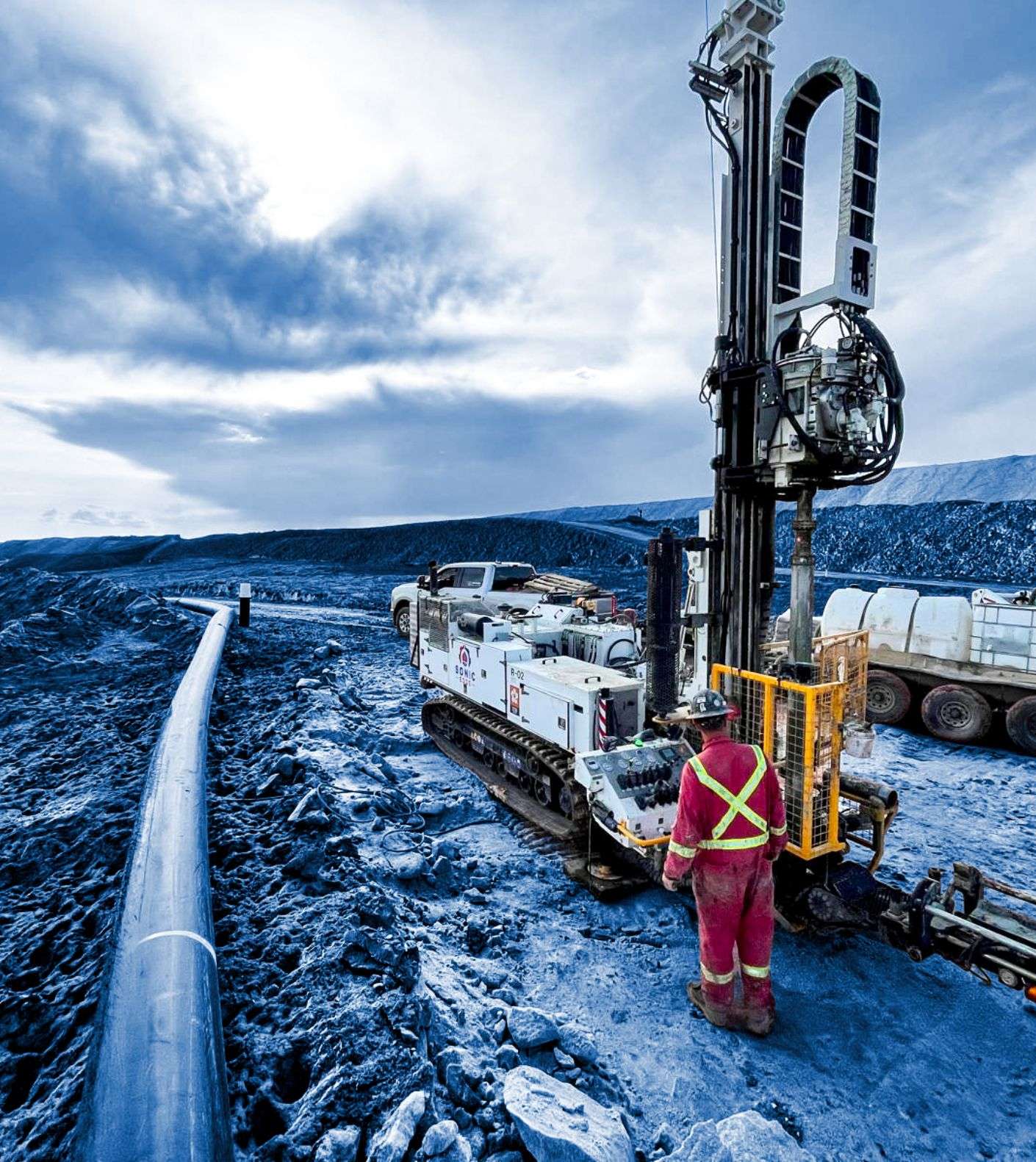
Water Well Installation
Purpose:
To access and extract groundwater for potable, agricultural, industrial, or exploration use.
Typical Installation Process:
a. Site Selection & Permitting
- Hydrogeological survey and aquifer mapping
- Compliance with local water rights and well construction standards
b. Drilling
- Methods: Mud rotary, air rotary, dual rotary, cable tool
- Borehole diameter is typically larger than the casing diameter
c. Casing & Screen Installation
- PVC or steel casing installed to prevent borehole collapse
- Well screen set in the aquifer zone to allow water entry
- Gravel pack placed around the screen to filter out fine particles
d. Sealing
- Bentonite or cement grout installed above the screen to prevent surface contamination
e. Development & Testing
- Airlifting, surging, or pumping to clear fine particles and improve yield
- Pump tests to evaluate yield, drawdown, and aquifer response
Applications:
- Drinking water supply
- Exploration (support wells for mineral drilling)
- Industrial and agricultural water usage
- Environmental monitoring
Dewatering System Installation
Purpose:
To lower the groundwater table or control water inflow to maintain safe working conditions in excavations, tunnels, open pits, or shaft sinking.
Common Dewatering Systems:
a. Wellpoint Systems
- Series of small-diameter wells (~2–4 inches) connected to a header pipe and vacuum pump
- Suitable for shallow excavations (up to ~6 m depth)
- Effective in sandy or silty soils
b. Deep Wells
- Large-diameter wells (6–12 inches) drilled to greater depths
- Equipped with submersible pumps
- Suitable for deep excavations or coarse-grained soils
- Spaced based on drawdown needs and soil permeability
c. Ejector Systems
- Use venturi effect to remove water from low-permeability soils (silts, clays)
- Circulate water under pressure through eductors
d. Sump Pumping
- Collection of water in sumps and removal using pumps
- Used as a backup or for short-term projects or coarse soils
Installation Steps:
- Hydrogeological investigation to determine soil permeability and water table level
- Design of well spacing, depth, and pumping requirements
- Drilling using auger, rotary, or jetting methods
- Pump and pipe installation
- System testing and commissioning
- Monitoring of drawdown, inflow rate, and water quality
Key Differences: Water Well vs. Dewatering System
| Feature | Water Well | Dewatering System |
| Purpose | Long-term water extraction | Temporary or permanent groundwater control |
| Well Design | Optimized for yield and water quality | Optimized for drawdown and flow rate |
| Pump Type | Submersible or turbine pumps | Vacuum or submersible pumps |
| Screening | Targeted aquifer screen | Perforated or open screen for inflow |
| System Life | Long-term or permanent | Often temporary (during construction or excavation) |
Monitoring & Compliance
- Water levels, drawdown, and recovery rates are regularly measured.
- Flow meters and sampling points may be installed.
- Systems must often comply with environmental permits, groundwater discharge regulations, and contamination controls.
Summary
| Aspect | Water Well | Dewatering System |
| Definition | Well to extract usable water from aquifer | System to lower groundwater to allow safe construction/mining |
| Methods | Rotary or dual rotary drilling, gravel-packed wells | Wellpoints, deep wells, ejectors, sump pumping |
| Key Outputs | Usable groundwater supply | Controlled water table and dry working zone |