
Frozen Ground Drilling and Casing
What is Frozen Ground Drilling and Casing?
Frozen ground drilling and casing is a specialized technique used to advance boreholes and install casing in permafrost, seasonally frozen soils, or artificially frozen ground. This method is critical in cold climates, arctic regions, and ground freezing projects, where conventional drilling methods may not be effective due to the hardness, abrasiveness, and ice content of frozen substrates.
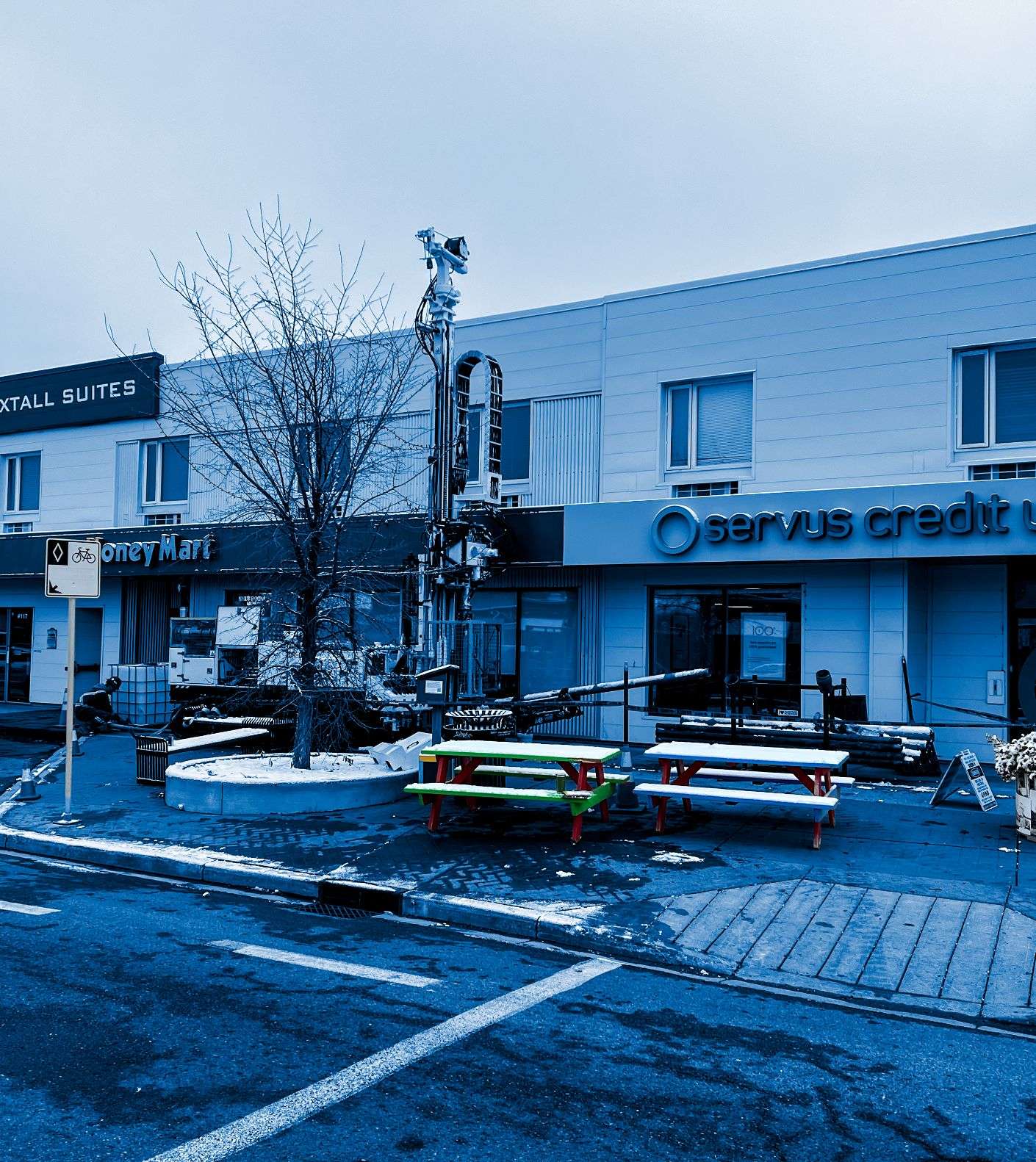
Drilling Methods for Frozen Ground
1. Rotary Drilling with Modified Bits
- Uses carbide-tipped or polycrystalline diamond compact (PDC) bits
- Requires low-heat operation and special lubricants (if needed)
- Effective for ice-rich permafrost or frozen tills
2. Air Rotary or Down-the-Hole (DTH) Hammer
- Uses compressed air instead of fluid to reduce thawing
- Suitable for hard, dry frozen ground or frozen rock
- Minimizes thermal disturbance
3. Auger Drilling
- Solid or hollow stem augers used for shallow permafrost or active layer drilling
- Common for geotechnical sampling or instrumentation installation
4. Sonic Drilling
- High-frequency vibration cuts through frozen sediments cleanly
- Delivers high-quality, minimally disturbed frozen cores
- Preferred for environmental sampling or cryostratigraphy
5. Core Drilling with Cryogenic Preservation
- Collects frozen core samples using triple tube barrels and cooling agents (e.g., dry ice, liquid nitrogen)
- Important for ice wedge studies, climate change research, and chemical analysis
Purpose of Frozen Ground Drilling
| Objective | Description |
| Penetrate frozen soil/rock | Drill through hard, icy, or cryogenic materials with minimal thawing |
| Install casing or instrumentation | Maintain borehole integrity and prevent refreezing or collapse |
| Support mining, geotechnical, or environmental programs | Collect samples or install monitoring wells in frozen zones |
| Facilitate artificial ground freezing | Drill freeze holes for shaft sinking, tunnel access, or groundwater cutoff |
Challenges of Drilling in Frozen Ground
| Challenge | Impact |
| High strength and abrasiveness | Frozen soil behaves like weak rock—requires robust tooling |
| Thermal sensitivity | Drilling can thaw surrounding ground, causing collapse or water ingress |
| Loss of circulation | Frozen zones may seal around drill string, trapping tools or slurry |
| Sample disturbance | Heat and vibration can damage frozen core structure or chemistry |
Casing in Frozen Ground
Purpose:
- Prevent hole collapse during and after drilling
- Isolate thaw-sensitive zones
- Maintain borehole access for wells, thermistors, or grout injection
Installation Process:
- Drill to required depth using suitable method.
- Install casing immediately after drilling to avoid freeze-back.
- Place sand pack or grout (as needed) around the casing.
- Seal above with bentonite or frozen clay to prevent vertical migration.
- Cap and insulate surface casing to prevent surface thaw/freeze cycling.
Safety and Environmental Considerations
- Avoid excessive heat from drill fluids or friction
- Use non-toxic additives for fluid systems in sensitive environments
- Ensure proper disposal of drill cuttings and frozen material
- Monitor for ground movement or thaw-induced subsidence during operations
Casing Materials
| Material | Use Case |
| Steel casing | High strength, used in permanent installations or high-pressure zones |
| PVC or HDPE | Lightweight, used for environmental or geotechnical monitoring |
| Thermistor strings or freeze tubes | Specialized casing with temperature sensors or brine flow for artificial freezing |
Applications
| Sector | Use Case |
| Mining (e.g., oil sands, diamond mining) | Delineation drilling, shaft freezing, piezometer installation |
| Infrastructure in permafrost | Foundation stability investigations, thermistor installations |
| Environmental assessments | Groundwater and gas monitoring in frozen zones |
| Tunneling and shafts | Freeze wall construction for groundwater control |
| Climate science | Ice core sampling and permafrost profiling |
Summary
| Attribute | Description |
| Definition | Drilling and casing through naturally or artificially frozen ground |
| Key Methods | Rotary, air rotary, auger, sonic, cryogenic core drilling |
| Main Challenges | High strength, thaw risk, fluid loss, tool entrapment |
| Casing Purpose | Maintain borehole, isolate thaw-sensitive layers, install sensors |
| Applications | Mining, infrastructure, permafrost monitoring, environmental programs |
Frozen ground drilling and casing is a highly specialized field requiring careful selection of equipment, methods, and casing systems to ensure safe, high-quality results without compromising the integrity of the frozen subsurface.