
Limited Access & Low-Clearance Rig Services
What is Limited Access and Low-Clearance Rig Services?
Limited access and low-clearance rig services refer to specialized drilling and sampling solutions designed for sites where standard drilling rigs cannot operate due to physical space constraints, height restrictions, or environmental sensitivity.
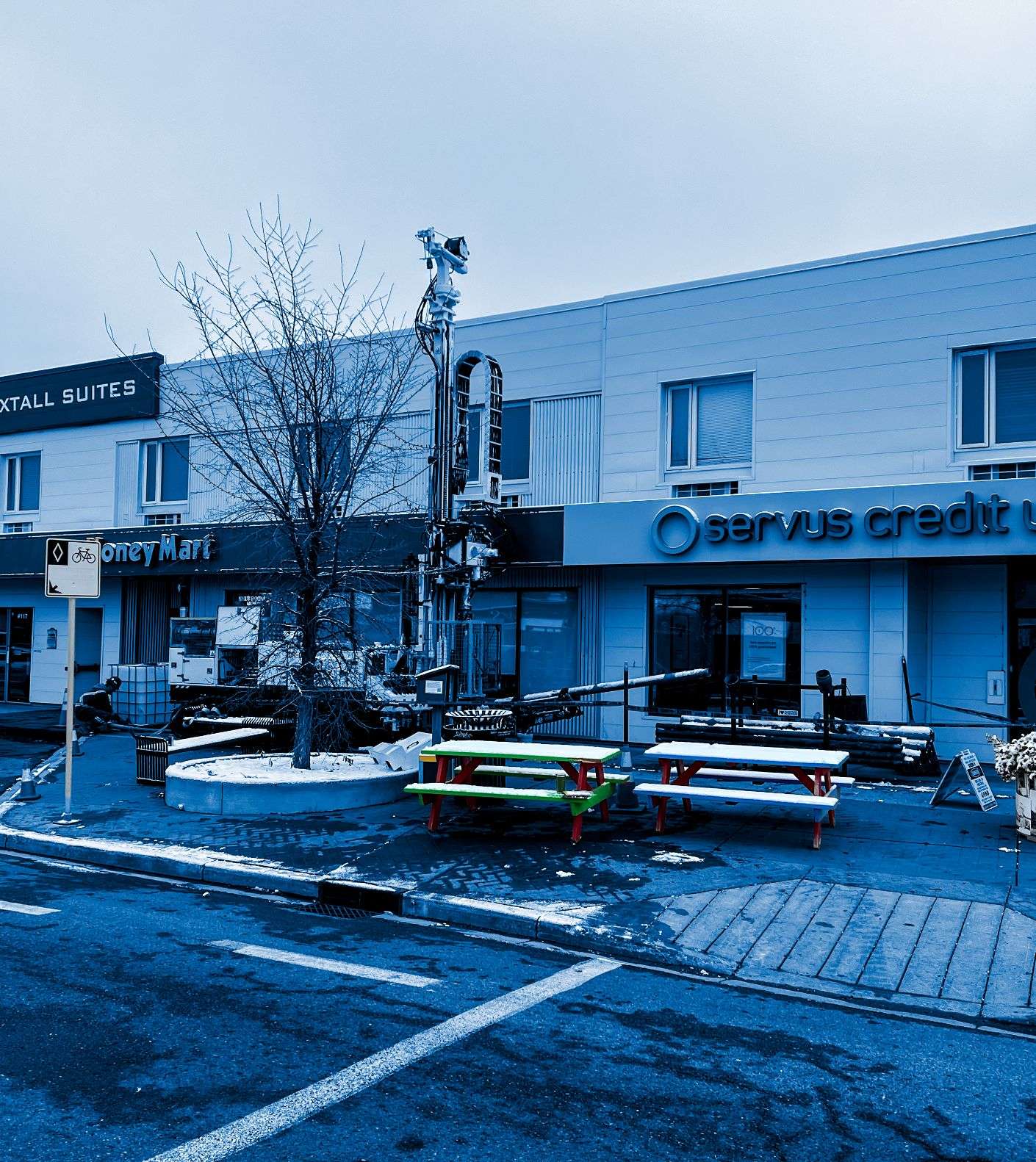
These services are essential for performing geotechnical, environmental, or structural investigations in challenging locations such as:
- Basements or underground structures
- Tunnels or shafts
- Industrial facilities with overhead piping or equipment
- Urban environments (sidewalks, courtyards, alleyways)
- Near or beneath existing infrastructure (e.g., bridges, floors, parking garages)
- Remote or steeply sloped terrain
Common Services Provided
1. Soil and Rock Sampling
- SPT (Standard Penetration Testing)
- Shelby tube sampling for undisturbed soils
- Rotary core drilling in rock or concrete
2. Direct Push Sampling
- Discrete or continuous soil cores
- Temporary well installation (hydropunch, vapor probes)
- Groundwater sampling
3. Well Installation
- Small-diameter monitoring well construction for groundwater or gas monitoring
- Sub-slab vapor point or pressure port installation
4. Geotechnical Instrumentation
- Inclinometer casing, piezometers, extensometers
- Settlement monitoring instruments
5. Structural & Utility Investigations
- Drilling through concrete slabs or foundations
- GPR-supported coring for utility clearance
Key Features of Limited Access & Low-Clearance Rigs
| Feature | Description |
| Compact design | Small footprint rigs (mini rigs, portable units, tripod setups) that can fit through standard doorways or narrow access points |
| Low mast height | Rigs with reduced mast height (often < 8 feet / 2.5 meters) to operate under ceilings or overhangs |
| Lightweight and modular | Components can be hand-carried or transported via small equipment for hard-to-reach or elevated areas |
| Rubber-tracked or wheeled platforms | Minimize ground disturbance and allow access across sensitive surfaces (e.g., landscaping, clean rooms) |
| Remote-powered or electric options | Reduce exhaust and noise in enclosed or sensitive environments |
Types of Limited Access Rigs
| Rig Type | Use Case |
| Portable tripod or hand auger kits | Light-duty soil sampling in confined spaces |
| Gas/electric-powered mini rigs | Environmental or geotechnical drilling inside buildings |
| Rubber-tracked small rotary rigs | Shallow to moderate-depth drilling in backyards or tight lots |
| CPT rigs with low headroom setups | Soil behavior profiling in enclosed areas |
| Sonic mini rigs | High-quality coring with minimal disturbance in limited access zones |
Typical Applications
| Sector | Application |
| Environmental | Indoor vapor intrusion assessments, sub-slab sampling, spill delineation |
| Geotechnical | Building additions, forensic investigations, foundation analysis |
| Industrial | Investigations under equipment platforms or in processing facilities |
| Urban infrastructure | Street/sidewalk drilling, basement dewatering well installation |
| Mining & Tunneling | Underground drift investigations, shaft monitoring instrumentation |
Advantages
| Advantage | Benefit |
| Access flexibility | Allows work in spaces where conventional rigs can’t go |
| Minimal disturbance | Protects landscaped or finished areas (lawns, tile floors, concrete) |
| Efficient mobilization | Short setup time and maneuverability in constrained sites |
| Indoor compatibility | Quiet, low-emission rigs suited for enclosed spaces |
Limitations
| Limitation | Notes |
| Reduced drilling depth | Most limited access rigs are restricted to ~10–30 m depending on method and soil |
| Lower torque/power | May limit performance in dense soils or rock unless advanced tooling is used |
| Manual transport | Modular systems may require manual labor for transport and assembly on-site |
| Sample size constraints | Smaller-diameter tooling may limit certain lab testing options |
Summary
| Attribute | Description |
| Definition | Specialized rig services for drilling and sampling in confined or low-clearance areas |
| Used For | Environmental, geotechnical, structural investigations where access is limited |
| Rig Features | Compact, low mast height, portable, rubber-tracked or electric-powered |
| Main Benefits | Versatile, efficient, minimal disturbance in sensitive or constrained settings |
| Common Locations | Indoors, basements, tunnels, urban spaces, steep slopes, under structures |